Luke 1:34-38; Luke 1:46-55
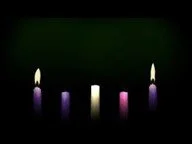
In our Advent candle-lighting prayer today, we ask something special of God. We ask that God will make us a people who receive and give birth to God’s love in this world. We ask, essentially, to learn and live out the obedience of Mary, the faith of Mary, the spiritual depth of Mary, so that we can be the heart and soul of Mary in a broken world that desperately seeks wholeness and healing and transformation.
So, I’m going to put my English major hat on today, and dive into a bit of classic literature, to help give us a framework for this “altogether love” that Wesley invites us to experience. In classical literature, what do we encounter as overriding themes? We essentially have three themes that appear: the conflict between good and evil; the experience of love (be it holy, or human; be it transformative, or romantic, or familial, or destructive); and the quest for virtue and moral truth. Through the framework of these themes, we can explore human nature, search for meaning in this life, encounter the divine, and struggle with personal growth.
We find the struggle of good vs evil in Greek myths, in Beowulf, in Renaissance works such as Paradise Lost, and more, exploring order vs chaos, and selflessness vs selfishness.
In the arena of love, we look at redemptive love and destructive love, and see that love drives actions and inspires sacrifice, such as Romeo and Juliet. Love also fuels personal growth, as we see in Pride and Prejudice, and also causes tragedy.
As for virtue and morality, ancient Greek philosophers, such as Plato and Aristotle, influenced literature, focusing on the virtues of wisdom, courage, and justice.
Literature helps us to understand the world around us. Themes of good vs evil give us a frame in which love provides emotional depth, and we engage in pursuit of virtue and meaning, including our relationship with the Divine.
We dive into literature hoping it will help us to understand the world around us. And nowadays, we have the benefit of books made into movies, for those folks who are not into reading. Just the other day, I mentioned one of my favorite childhood classics to a friend, A Wrinkle in Time by Madeliene L’Engle, which I have read and re-read often, and my friend responded, oh yes, I saw that movie!
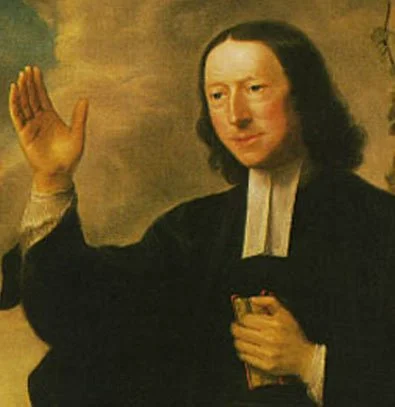
John Wesley, the founder of Methodism, helps us to know the difference between an “almost love” and an “altogether love.” You might think about it in terms of what photographs we share, in social media. Rarely do we see a crying baby online, even though we all know babies cry. Rarely do we see anything too “messy”…when we post a picture or share a story online, it is rarely deeply personal, but rather, our “almost selves”…the easy-to-be-with-self, where we don’t present anything too challenging or troubling for others to see.
Fortunately, God has access to not just our social media app, but our whole lives. And, better yet, the grace and love of God impact us no matter where we are, no matter who we are, no matter how much or how little money we have, and no matter what our skin color may be. God sees us, my friends, with all our warts and wrinkles and general imperfections, and loves us with a divine love. And when we feel that divine love, and respond to that divine love, saying, wow, I feel the love!...that is truly an altogether love.
A brief segue here, as I share a story about our 3-year-old granddaughter, Brynn. She was dancing to some music my son was playing for her on his smartphone. Observing her dancing, he said to her, “You feeling the music?” She paused and touched the phone, and said “mmm, I feel it!”
That’s, of course, the concrete thinking of a toddler…but God reaches us in much the same way, checking in with us wherever we are at, accepting us wherever we are, and then bringing us, by His grace and love, to a transformed way of life, a deeper experience of the Divine. Indeed, a toddler may be a great example of “altogether love” in that the child authentically feels the love and is incapable of what you might call a surface-level expression of feelings.
An altogether love is a deep love, a heart-felt love. A love that does not do out of obligation. A love that does not do just because everybody thinks it’s a good idea. An altogether love acts as a natural expression.
What do I mean by a natural expression? Well, quite simply, what comes to us naturally. God is love, and created us to be in his image, which is love. So, we are God’s expression of love in this world. Naturally.
When Mary was approached by the angel, she interacts in a very natural way, asking a question. Indeed, she interrupts the angel’s prepared proclamation, to inquire how she could bear this holy child, since she has not been intimate with Joseph. The angel proceeds to explain the how, essentially covering the whole mysterious miracle by saying “…nothing will be impossible with God.” This is accepted by Mary, who responds that she is ready for this seemingly impossible mission, to carry and give birth to the Son of God. And why would she be prepared to do this? It can only be because she is acting with an altogether love, a deep, authentic, natural love.
Saying yes to this holy miracle without knowing where it will lead or exactly how things will play out…it’s not easy choosing a new path in life, and yet, Mary chose to say yes because she spoke from her heart to the heart of God.
Have you encountered a choice in your life, where you said yes out of a deep sense of love, not knowing where it would lead or how it would turn out? Did we stop and ask ourselves, are we worthy of this love, and allow doubt to hold us back? Or did we embrace the love, knowing in our hearts that our flawed selves are indeed wholly loveable?
God meets us where we are, my brothers and sisters in Christ, and changes us, in that meeting, so that we simply can’t hold back, we are so eager to run with joy to share that love with an exuberance that cannot be contained! Mary was so excited that she went “with haste” (Luke 1:39) to visit her cousin Elizabeth, so they both could talk about what it is to be with child, allowing God’s love to be at work in them and through them.
The author of the 3rd chapter in An Almost Christmas, titled “An Altogether Love,” written by April Casperson, writes “It takes time to build relationships and trust another person. But when we take the time to be in genuine relationship, we eventually can stop presenting an “almost self” and share our “altogether self”…(helping us)…to move from an almost to an altogether love.” (p74).
My friends, this Advent story is a story so much more thrilling than any of the classics in literature. It has all the flavorful thematic ingredients of a classic: good vs evil, love, virtue, and morality.
It’s risky, loving, isn’t it? Yet, Mary took that risk. And love shows up, over and over again, in our lives. Never giving up on us. Why? Because God is love. And we are created to be loving people. A loving people who share the good news of salvation to the world. And it all began with an angel, having a conversation with a young woman named Mary. And grew, and grew, as the news spread through shepherds and angels, about a loving king, not an oppressive king.
Let us consider, in this Advent season, how God calls us to help one another move from an almost love…a love that controls, shapes, or tries to possess the Christmas experience…to an altogether love…a love that reflects and experiences the mystery, the unknown, the joyous, abundant life as Christ enters into our lives!
We are valued by God for who we are. Who was Mary? The mother of our Savior was not recognized as having any status in the society of her day. Yet God chose her. Consider how you may answer, when God chooses you for a divine purpose, so that God’s altogether love may be revealed through you.
And now, for a couple of homework questions during Advent.
1. What barriers in your faith journey have you encountered that seem to keep you at arm’s length from fully embracing God’s love? (And, conversely, if your faith journey has brought you fully into the embrace of God’s love, how would you see that love expressing itself in the life of our church and community, and how can your pastor and your church help you to express that love?)
2. How do you see yourself in relationship with God and community…is your “almost self” presenting to the community and the world, and if so, would you like to present your altogether self? How can your church family support you in this desire?
AMEN!
Pastor Elizabeth Bailey-Mitchell